
 Share
ShareCaring for your incision is one of the most hands-on parts of recovery after breast reconstruction — and it's completely normal to have questions about it. You'll go home with dressings covering your surgical sites, and knowing what they do, how to care for them, and what to watch for can help you feel steady and confident during this stage of healing.
Your PRMA care team will send you home with detailed, personalized discharge instructions, and we're always just a phone call away if something doesn't look or feel right. This guide walks through the basics — but your surgeon's specific instructions always come first. For a broader look at what recovery involves, see our DIEP flap six-week recovery guide.
Types of Surgical Wound Dressings After Breast Reconstruction Surgery
Several dressing types may be used, sometimes in combination, depending on your procedure and your healing stage.
Gauze and Non-Adherent Dressings
Soft gauze or non-stick pads are often placed directly over the incision. Because they don't cling to healing tissue, they're gentler to remove and typically held in place with tape or a larger adhesive covering.
Foam and Absorbent Dressings
In the first few days, when drainage tends to be highest, foam dressings help absorb fluid while keeping the wound in a moist, healing-friendly environment.
Transparent Film Dressings
These thin, clear, waterproof dressings let your surgical team check the incision without removing it. They're often used later in healing, once drainage has slowed, and can make showering simpler.
Surgical Bras and Compression Garments
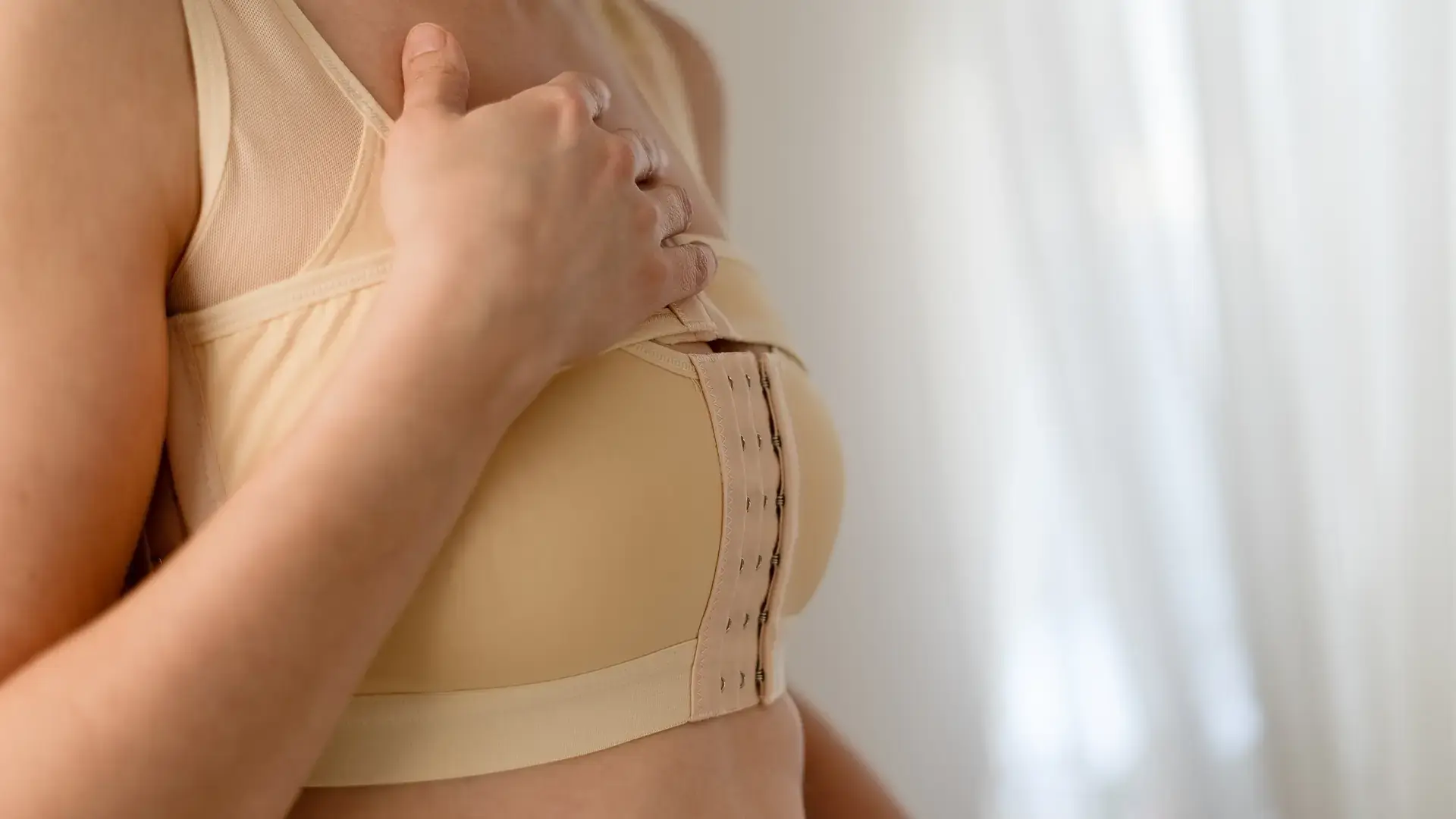
Along with your dressings, you'll likely wear a surgical bra or compression garment. It supports the reconstructed breast, reduces swelling, and helps keep dressings secure. Your surgeon will let you know how long to wear it.
How to Change a Wound Dressing at Home After Breast Reconstruction
If your surgeon has instructed you to change your own dressing, here's what that generally looks like:
- Wash your hands thoroughly with soap and water for at least 20 seconds.
- Gather your supplies beforehand — clean dressings, tape, gloves if recommended, and any products your surgeon prescribed.
- Remove the old dressing gently. If it's stuck, dampen it slightly with sterile saline or water first.
- Look at the incision. Note any changes in color, drainage, odor, or overall appearance.
- Clean the area only if instructed — and only using the method your surgeon outlined.
- Apply the new dressing as directed, then gently secure it with tape.
- Dispose of the old dressing and wash your hands again.
A few reminders: never apply lotions, ointments, or other products to your incision unless your surgeon has told you to, and always follow PRMA's written discharge instructions exactly — protocols can vary based on your specific procedure and incision sites.
What to Expect: Surgical Incision Healing Stages
With any surgery, healing happens in stages, and it's helpful to know roughly what to expect:
- Weeks 1–2: This is the active phase of recovery. Your incisions are closing, and some swelling, bruising, and drainage are normal. You may feel tender or fatigued, with fluctuating energy levels.
- Weeks 3–4: As healing progresses, your body enters rebuilding mode. Swelling and bruising fade, drainage slows, and many patients feel increased energy and mobility. Your incision may appear pink or slightly raised — this is normal and indicates tissue rebuilding.
- Week 4 and beyond: Healing becomes a slower process as scars soften, flatten, and fade in color over the months. Sensation in the area may also change as nerves heal. This gradual stage requires patience, and your care team can help you understand what's typical.
Every patient heals at their own pace — your care team can help you understand what's typical for you.
Signs of Wound Infection to Watch for After Breast Reconstruction
Most healing goes smoothly, but it's good to know the signs of infection that mean it's time to call your surgeon:
- Increasing redness, warmth, or swelling beyond normal post-surgical inflammation
- Wound edges that appear to be separating or opening
- Thick, cloudy, or foul-smelling drainage
- A fever above 101°F (38.3°C)
- Sudden or new pain at the surgical site
- Skin that looks blue, grey, or dark near the incision, which can signal circulation concerns — especially with flap procedures
If you notice any of these, don't wait — reach out to your surgeon right away.
Questions About Your Recovery? PRMA Is Here to Help
Recovering from breast reconstruction takes care and attention, and PRMA is with you at every step. Our fellowship-trained microsurgeons and dedicated nursing team provide thorough discharge instructions, wound care guidance, and ongoing support — whether you live in San Antonio or are heading home after traveling for surgery.
If you have questions about your dressings, your incision, or anything else during recovery, we're here. And if you're still exploring your reconstruction options, we invite you to schedule a consultation to learn what your recovery journey might look like.